

Nobody hands new mothers a manual for what to eat once breastfeeding starts — just a lot of conflicting advice from relatives, the internet, and sometimes your own doctor. Some of it is genuinely useful. A lot of it is repeated without anyone checking where it came from.
Here's a version based on what nutrition bodies actually recommend — the National Institute of Nutrition (NIN) and ICMR guidelines for Indian lactating mothers, alongside established paediatric and lactation guidance — not internet folklore.
Why diet matters more right now
A breastfeeding mother's body is doing real work. NIN guidelines estimate an additional 600 kcal a day are needed in the first six months of breastfeeding, dropping to about 520 kcal a day after that, as milk volume gradually reduces. That's not a license to eat anything — it's a reason to eat well, consistently, across food groups, rather than skipping meals because there's suddenly a baby to look after.
10 foods to eat while breastfeeding
- Moong dal and masoor dal — Easy to digest, protein-rich, and a staple across most Indian diets — a practical daily protein source that doesn't sit heavy.
- Leafy greens (spinach, methi saag, mustard greens) — A strong source of iron and calcium, both of which are in higher demand during lactation.
- Fenugreek seeds (methi) — One of the most studied galactagogues. Soaked overnight and consumed in the morning, or used in cooking, is the traditional approach. Not advisable in concentrated/supplement form if you have thyroid issues or asthma — food-level use is different from medicinal doses.
- Fennel seeds (saunf) — Used traditionally to support milk production and ease digestion, for mother and, indirectly, for a baby prone to gas.
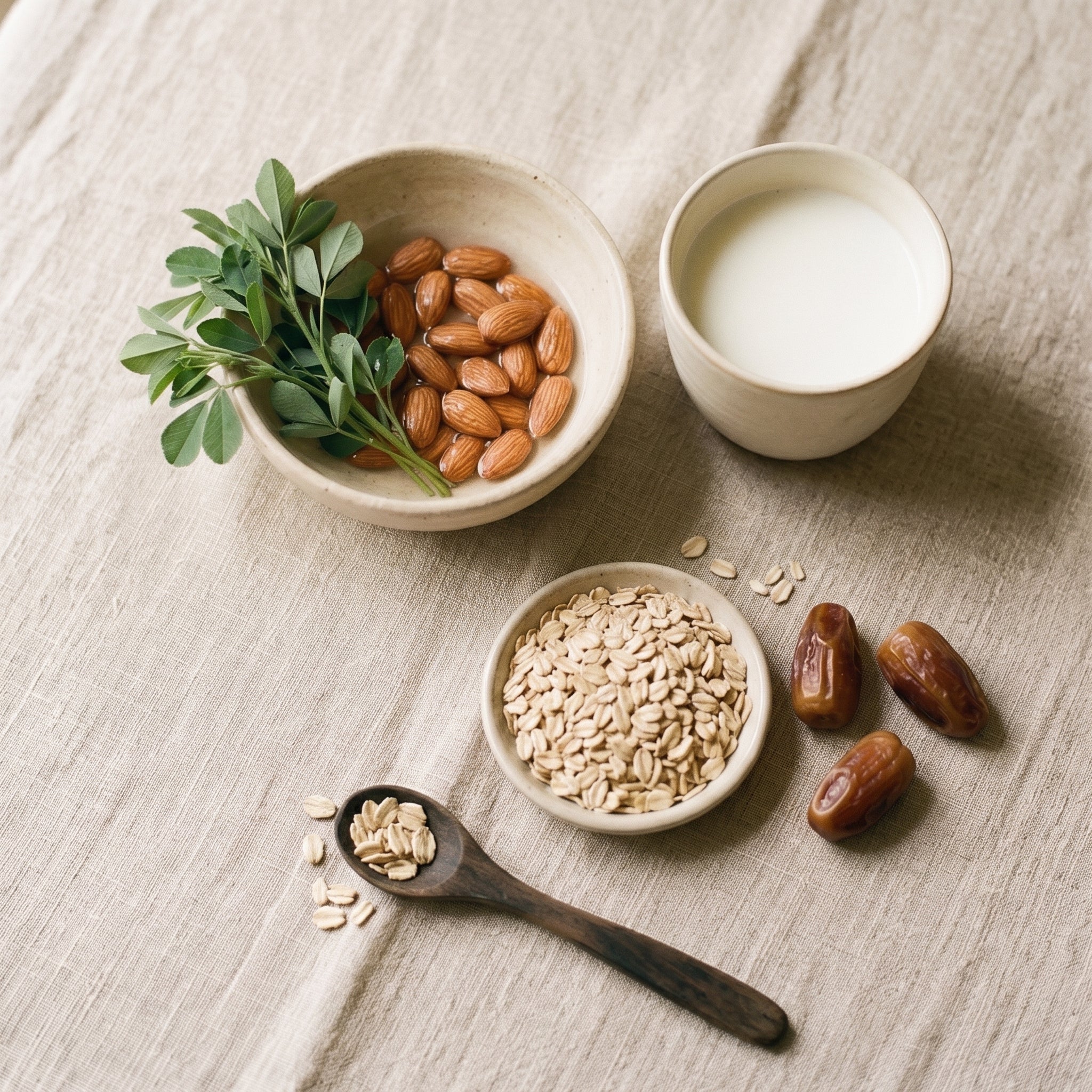
- Oats and barley — Appear repeatedly in lactation nutrition research as supportive of milk supply, and make an easy, fibre-rich breakfast.
- Paneer and milk — A practical calcium and protein source for vegetarian mothers, where dietary calcium needs go up during breastfeeding.
- Eggs (for non-vegetarian mothers) — A complete protein source that's quick to prepare on the days cooking feels like too much.
- Fish like salmon, pollock, or catfish (for non-vegetarian mothers) — Lower-mercury options recommended by health bodies, and a good source of omega-3s for a baby's developing nervous system.
- Nuts and seeds (almonds, sesame/til) — A dense source of healthy fats and minerals, easy to eat through the day when sitting for a full meal isn't always possible.
- Drumstick (moringa) — A traditional addition to the Indian lactation diet, often used in sambar or saag, valued for its iron and calcium content.
16 foods to limit or avoid while breastfeeding
A note before this list: most foods don't need to be avoided outright. The exceptions below fall into two groups — things every breastfeeding mother should genuinely limit, and things that only matter if your specific baby reacts to them. We've marked the difference.
Limit or avoid for everyone:
- Alcohol — Health authorities recommend avoiding it altogether. If you do have a drink occasionally, waiting at least 2 hours before the next feed reduces how much reaches your baby.
- Excess caffeine — More than 2–3 cups of coffee a day (around 300mg) can build up in a newborn's system and show up as fussiness or disturbed sleep.
- High-mercury fish — King mackerel, shark, swordfish, tilefish, and marlin. Mercury passes into breast milk and can affect a baby's developing nervous system.
- Raw or undercooked fish, meat, and eggs — A general food-safety precaution, not breastfeeding-specific, but worth holding to while your immune system has less margin for error.
- Unpasteurised milk and milk products — Carries a risk of bacterial contamination that pasteurisation is specifically designed to remove.
- Energy drinks — Combine high caffeine with stimulants that haven't been well studied in lactation — better avoided than guessed at.
- Aerated and sugary sodas — Offer nothing nutritionally and crowd out the nutrient-dense food your body needs right now.
- Heavily processed and fried/junk food — Not dangerous in small amounts, but a poor trade against the extra ~600 kcal/day your body actually needs to spend well.
- Excess added sugar and artificial sweeteners — Worth moderating rather than eliminating; the issue is volume, not the occasional dessert.
- Strong herbal teas in medicinal quantities (peppermint, sage, parsley) — In concentrated or supplement form, these have traditionally been used to reduce milk supply — fine as an occasional garnish, not a daily tea.
- Tobacco and recreational substances — Pass into breast milk and affect a baby directly. Not optional.
Limit only if your baby specifically reacts:
- Very spicy food — Most babies are unaffected, but if yours seems unusually fussy after a particularly spicy meal, it's worth noting and adjusting.
- Gas-forming vegetables (cabbage, cauliflower, broccoli) — Genuinely fine for most mother-baby pairs. Only worth reducing if you notice a pattern of colic or discomfort after eating them.
- Cow's milk and dairy — Only relevant if your baby shows signs of cow's milk protein allergy (excessive crying, rashes, blood in stool) — and only under your paediatrician's guidance, not a guess.
- Common allergens (peanuts, shellfish, eggs) — Only a concern with a family history of allergies, and even then, current guidance favours checking with your paediatrician rather than pre-emptively cutting these out.
- Excess garlic and onion — Said to change the taste of breast milk; most babies don't mind, a few do. Watch your own baby's response rather than following a blanket rule.
The honest takeaway
There's no single diet that works identically for every breastfeeding mother and every baby. The foods to eat are genuinely worth building into your routine — they're not just tradition for tradition's sake. The foods to limit fall into two real categories: a short list everyone should moderate, and a longer list that only matters if your own baby tells you it matters.
Trust what you're noticing in your own home over generic warnings that may not apply to your baby at all.
This article is for general information and reflects current ICMR/NIN and paediatric nutrition guidance. It isn't medical advice — for anything specific to your health or your baby's, talk to your doctor or a lactation consultant.






Share:
How to Help Your Newborn Sleep Faster (Without Guesswork)